
Beginner-Friendly Basic Forex Terms
To understand the forex and the forex market, you must understand its language.
Forex, like all other types of investments, has its own unique vocabulary, and mastering its key terms is essential for a successful investment.
In this article, we will go through some of the commonly used beginner-friendly basic forex terms in forex investment.
Table of Contents
Beginner-Friendly Basic Forex Terms
Trading in the foreign exchange market can be very confusing for beginners, as it has its own terms and technical jargon. Popular financial websites like Investopedia and Vantage have emphasized the importance of understanding relevant forex terms for beginners.
Below are some of the popular beginner-friendly basic forex terms in trading you should understand before you begin trading.
Market Mechanics
1. Currency pair (Base and Quote Currency): A currency pair is the quotation of two different currencies, as currencies are always traded in pairs for forex. In currency pairs, there is a base currency and a quote currency.
2. Base Currency: A Base Currency is the first listed currency, and it represents the base unit currency that is being sold or bought.
3. Quote Currency: The Quote Currency is the second listed currency, and it acts as the indicator for the amount required to buy a unit of the base currency.
4. Pip: Pip is the short form of the words Point In Percentage. Point in Percentage is the smallest unit of price movement in a currency pair, i.e, the standard unit of measurement for price changes in the forex market.
5. Exchange Rate: This is the determinant of the value of a currency when converted into another. In other words, it is the value of a base currency expressed in terms of the quote currency, e.g., how many Pounds it takes to buy a Naira.

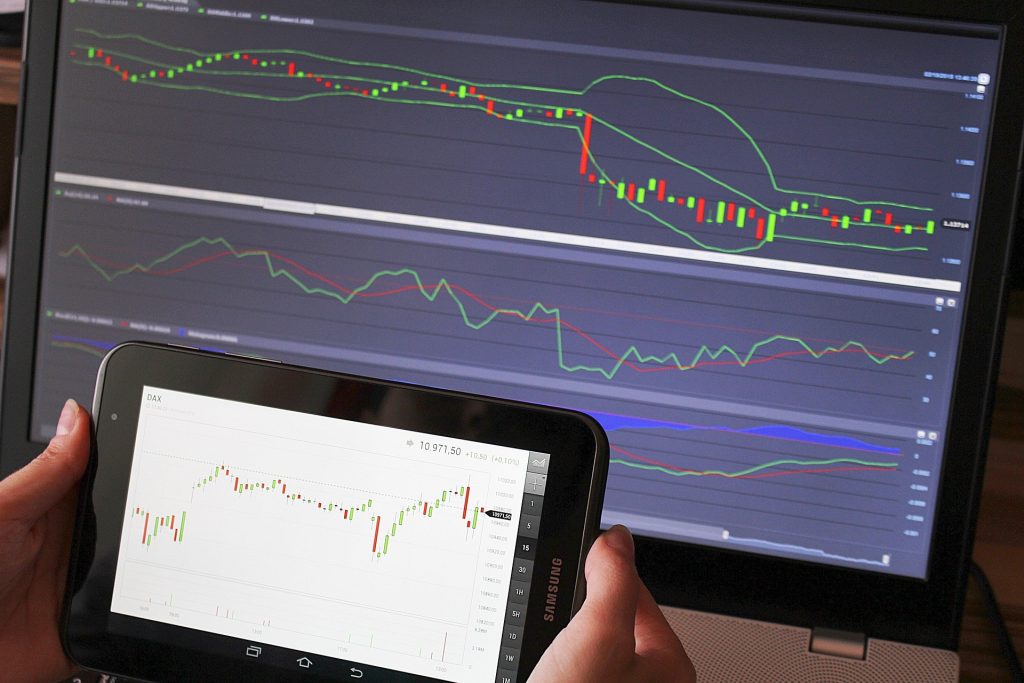
6. Candlestick Chart: Candlesticks are used to represent the size of price fluctuations in forex trading visually. Traders make use of this chart to identify different patterns and gauge the near-term directions of prices in the market.
7. Quote: The price of an asset at the last trade is known as a Quote. It is the latest agreed-upon price at which an asset (currency) can be exchanged.
Check Out: Beginner-Friendly Forex Trading Basics
Account and Risk Management
1. Leverage: Leverage is the borrowed capital from a broker that allows a trader to increase their trade size and magnify their purchasing power. It amplifies both the profits and potential losses.
2. Margin: Margin is the minimum initial amount a trader must deposit with their broker to open a market and maintain a leveraged position. This is done to demonstrate the trader’s ability to cover potential losses.
3. Lot Size: Lot Size is the standardized volume of a trade. It is usually 100,000 units of the base currency, while a Mini Lot is 10,000 units, and a Micro Lot is 1,000 units of the base currency.
4. Carry Trade: This is a trading strategy in which an investor borrows from a low-interest currency and invests the yield in a higher-interest currency. The goal of a carry trade is to benefit from the differential interest rate between the two currencies.
5. Take-Profit Order: This is the limit order placed with the broker to close a position when its price rises to a level above the purchase price. This strategy allows traders to capitalize on the market’s rise by closing their position at a more favorable price.
6. Stop-Entry Order: A stop-entry order is the opposite of a limit order. In a stop-entry order, a trader sets a sell price below the current market price or a buy price above it when they expect that the price will continue moving in the same direction.
Read Also: 5-Star Hotels in London to Skip Before You Waste Your Money
Trading Actions
1. Bid & Ask Price: Bid is the price your broker is willing to buy a currency pair, while Ask is the price they are willing to sell it to you.
2. Position: A position in forex trading refers to the amount of a particular currency a trader holds. It is a representation of their current market exposure and can either be long (buy) or short (sell). The size and direction of the position depend on the trader’s market perception and risk appetite.
3. Going Long (Buying): Going long, also known as buying, is the speculation that the base currency will increase in value relative to the quoted currency. A long position involves the purchase of a currency with the expectation that its value will rise, allowing the trader to profit from the potential appreciation.
4. Going Short (Selling): Going short or selling is the speculation that the base currency will decrease in value relative to the quote currency. A short position aspires to profit from the decline in a currency’s price by selling it first, then buying it back at a lower price. This allows the trader to benefit from the downward market movements.
5. Open Position: An open position is a still active position. It is a trade that has not yet been closed; therefore, the trader still has market exposure, and the position may continue fluctuating in value until it’s closed.
6. Close Position: A closed position, though, is a trade that has already been completed. This means that the trader has sold or bought a currency pair and then later bought back or sold the same amount of the same currency pair to close out the position.
7. Open Order: An open order is an order that has not yet been fulfilled. It is an instruction given to a broker by an investor to sell or buy a security at a specific price, which has not yet been executed.
Beginner-Friendly Basic Forex Terms Final Thoughts
The world of forex can be really daunting for beginners who are not well-versed in its language. As an impending trader hoping to have a successful forex investment, you must take your time to fully understand this vocabulary for a smooth-running investment.
This post elaborates on some of the commonly used forex trading terms for everyday trading use.
Frequently Asked Questions for Basic Forex Terms
What is the Difference Between Balance and Equity
Balance is the total amount of funds in a trader’s account that is not tied to an active trade, while equity is the account balance plus or minus the live, open profits or losses of a trader’s current trades.
How to Read a Forex Quote
Forex quotes usually display two prices for a currency pair; the first number is the bid/sell price, while the second number is the ask/buy price.