A good Bangkok itinerary can save you from two common mistakes which is spending half your trip stuck in traffic and wasting time deciding what to do next. Bangkok is energetic, chaotic, delicious, and easy to enjoy when you have a plan in place.
Three days is enough to experience the city’s famous temples, street food, markets, nightlife, and river views without feeling rushed. You will not see everything. Nobody does, but you can leave feeling fulfilled like you truly experienced Bangkok rather than simply passing through.
Why This Bangkok Itinerary Works
Bangkok is huge. Attractions that look close on a map can take much longer to reach than expected.
What this really means is you should group activities by location instead of just moving without direction across the city. This Bangkok itinerary follows that principle, helping you spend more time exploring and less time staring at traffic through a taxi window.
Before you start, choose a hotel near a BTS Skytrain or MRT station. That single decision can save hours over three days.
Related Post: 7 romantic hotels in Bali with private pools for couples who want privacy
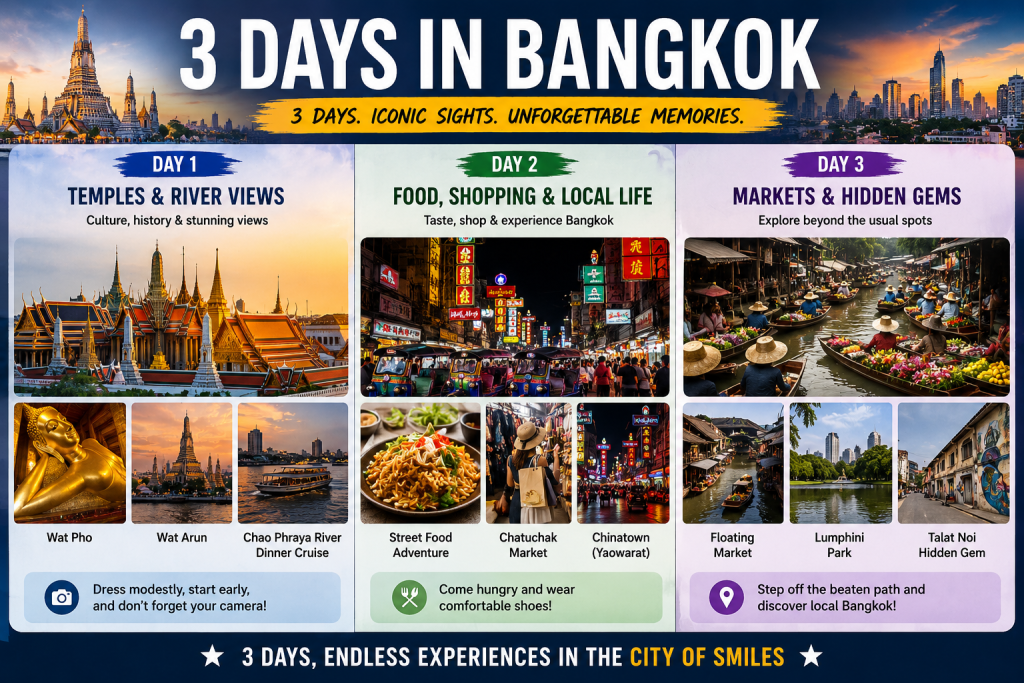
Day 1: Temples, History, and River Views in Your Bangkok Itinerary
Start early because Bangkok’s heat has no respect for your vacation plans.
Visit the magnificent Grand Palace first. The architecture alone is worth the visit. Inside the palace complex, you will find the famous Temple of the Emerald Buddha, one of Thailand’s most revered religious sites.
Next on the list, walk to Wat Pho. The giant reclining Buddha is impressive in photos but much more striking in reality. Take time to explore the quiet courtyards too, and allow your body to be calmed.
You could also cross the river by ferry to Wat Arun. The riverside temple is very beautiful, especially during late afternoon when sunlight reflects off its intricate decorations.
Bangkok Itinerary Evening Tip
Spend the evening along the Chao Phraya River. A dinner cruise is popular, but even a simple river ferry ride offers fantastic views for a fraction of the cost.
If you enjoy photography, the sunset around Wat Arun provides some of the best shots in the city.
Bangkok Itinerary Day 2 for Food, Shopping, and Local Culture
Day two focuses on the modern side of Bangkok.
Begin at Chatuchak Weekend Market if your visit falls on a Saturday or Sunday. With thousands of stalls selling clothing, food, art, and souvenirs, it is easy to spend hours buying and checking out all sorts of stuff.
Visiting on a weekday? You’re not left out, either. Explore the shopping districts around Siam Centre and MBK Centre instead.
Lunch should involve street food. You could try some of their known cuisine, like pad thai, mango sticky rice, grilled seafood, or boat noodles. Some of Bangkok’s best meals come from small stalls with plastic chairs and long queues.
Trust the crowd wherever you see one. Locals rarely line up for bad food.
Bangkok Itinerary Food Experience You Should Not Skip
A food tour can be one of the highlights of your Bangkok itinerary. Areas such as Yaowarat Road come alive after dark.
Walk slowly, enjoy the atmosphere, eat often and regret nothing.
Day 3: Bangkok Itinerary for Markets and Hidden Gems
Your final day is perfect for exploring beyond the classic tourist stops.
Start at the Damnoen Saduak Floating Market if you want the traditional floating market experience. For a less touristy option, consider checking out the Amphawa Floating Market.
Afterwards, visit Lumphini Park. It offers a welcome break from the city’s nonstop pace. You might even spot the famous monitor lizards wandering near the lake.
In the afternoon, explore creative neighbourhoods filled with cafes, galleries, and independent shops. Areas such as Talat Noi offer a different side of Bangkok that many visitors miss.
Hotel Tips for This Bangkok Itinerary
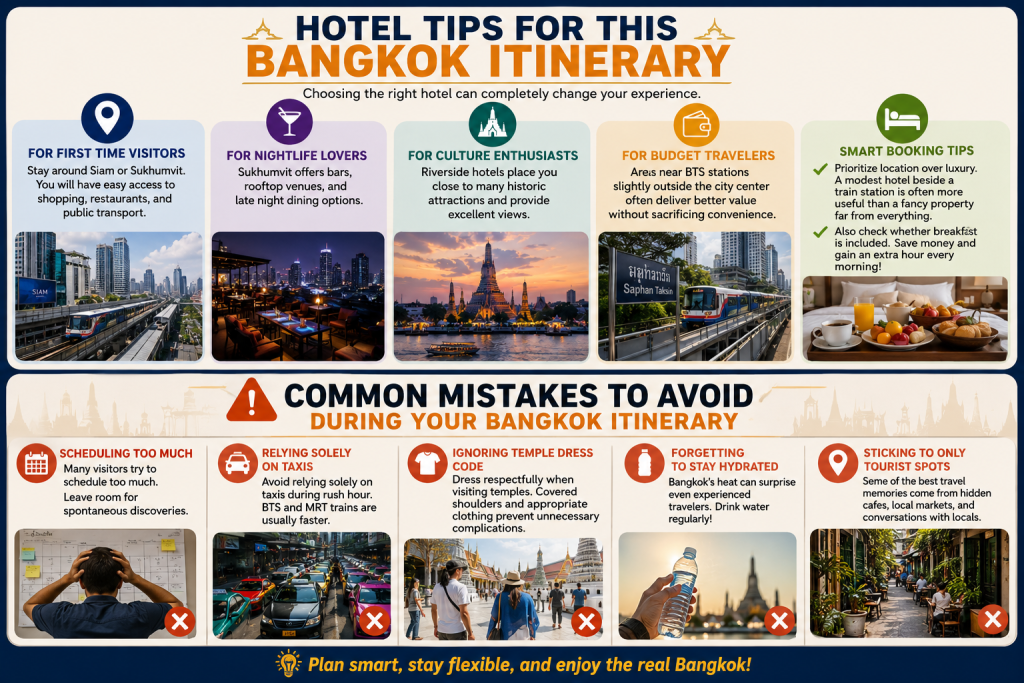
Choosing the right hotel can completely change your experience.
For first-time visitors: Stay around Siam or Sukhumvit. You will have easy access to shopping, restaurants, and public transport.
For nightlife lovers: Sukhumvit offers bars, rooftop venues, and late-night dining options.
For culture enthusiasts: Riverside hotels place you close to many historic attractions and provide excellent views.
For budget travellers: Areas near BTS stations slightly outside the city centre often deliver better value without sacrificing convenience.
When comparing hotels, prioritise location over luxury. An average and modest hotel beside a train station is often more useful than a fancy property located far from everything.
Also, check whether breakfast is included. It sounds small until you realise you are saving money and gaining an extra hour every morning.
Common Mistakes to Avoid During Your Bangkok Itinerary
Many visitors try to schedule too much. Try to leave room for spontaneous discoveries. Some of the best travel memories come from unexpected temples, hidden cafes, or conversations with locals.
Avoid relying solely on taxis during rush hour. BTS and MRT trains are usually faster.
Dress respectfully when visiting temples. Covered shoulders and appropriate clothing prevent unnecessary complications and harassment.
Most importantly, stay hydrated. Bangkok’s heat can surprise even experienced travellers.
Read Also: How to Predict Volatility 2 Weeks Early
Conclusion
This Bangkok itinerary balances history, food, shopping, culture, and relaxation across three enjoyable days. You will see iconic landmarks, explore local neighbourhoods, taste incredible food, and experience different sides of the city without feeling overwhelmed.
The secret to a memorable visit is simple. Stay near public transport, start your days early, and leave room for surprises. Bangkok rewards curious travellers, and even a short visit can feel remarkably full when your itinerary works with the city instead of against it.
Frequently Asked Questions
Is 3 days enough for a Bangkok itinerary?
Yes. Three days is enough to see major temples, enjoy local food, explore markets, and experience Bangkok’s atmosphere while still having time to relax.
What area is best for hotels in Bangkok?
Sukhumvit and Siam are excellent choices for first-time visitors because they offer convenient transport links, dining options, and shopping.
What is the best way to get around Bangkok?
The BTS Skytrain and MRT subway are usually the fastest ways to travel around the city and avoid heavy traffic.
When is the best time to visit Bangkok?
The cooler months between November and February are generally the most comfortable for sightseeing and outdoor activities.
Should I book attractions in advance?
Popular attractions usually do not require booking, but river cruises, food tours, and special experiences are often worth reserving ahead of time.