You find a beautiful hotel overseas for $120 per night and then go ahead to book it and check out.
Your bill: $260.
This is not a mistake. This is the reality of the hidden costs of international hotel stays that most travellers only discover at the front desk after it’s too late to change hotels.
Below are the 7 most common hidden fees that silently double your final bill.
The Resort Fee Included in Hidden Costs of International Hotel Stays
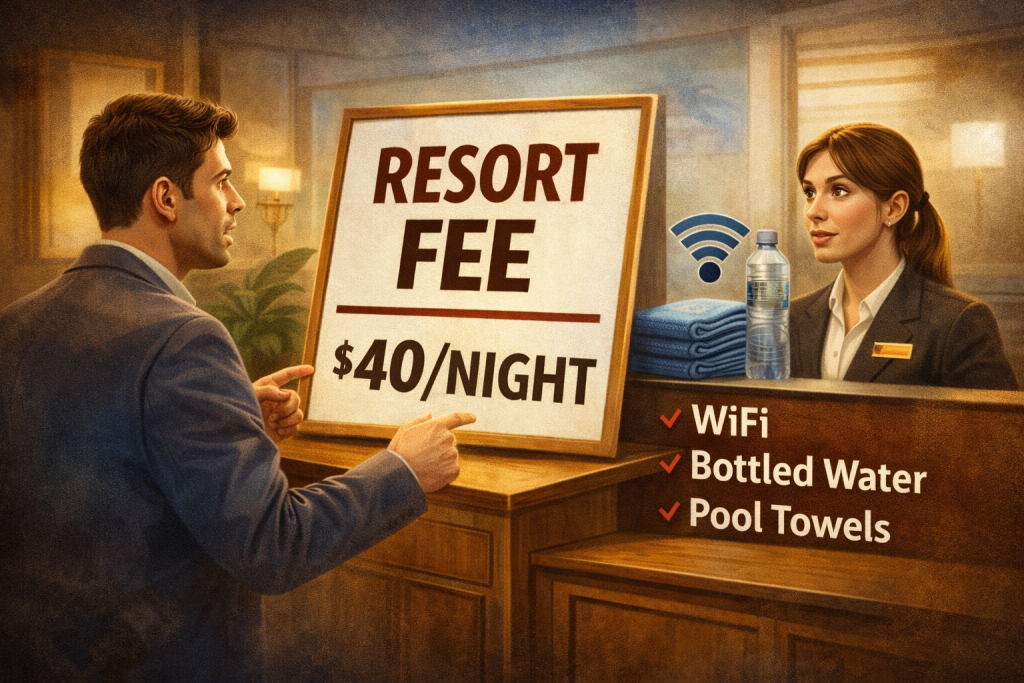
You book a hotel without a pool or gym, yet you still pay a “resort fee.”
This is the most notorious of all hidden costs of international hotel stays. In the US, it averages $25–$50 per night. In Mexico, the Caribbean, and even European cities, it is spreading fast.
What it covers: WiFi, bottled water, pool towels. Things that should be free.
What it actually does: Adds 20–40% to your room rate with zero value.
How to spot it: Scroll past the “Book Now” button. Look for “Mandatory resort fee payable at hotel.” It is never included in the advertised price.
Related Post: How to Book the Cheapest International Flights in 2026
Tourist Tax — The Fee You Only Hear About at Check-In
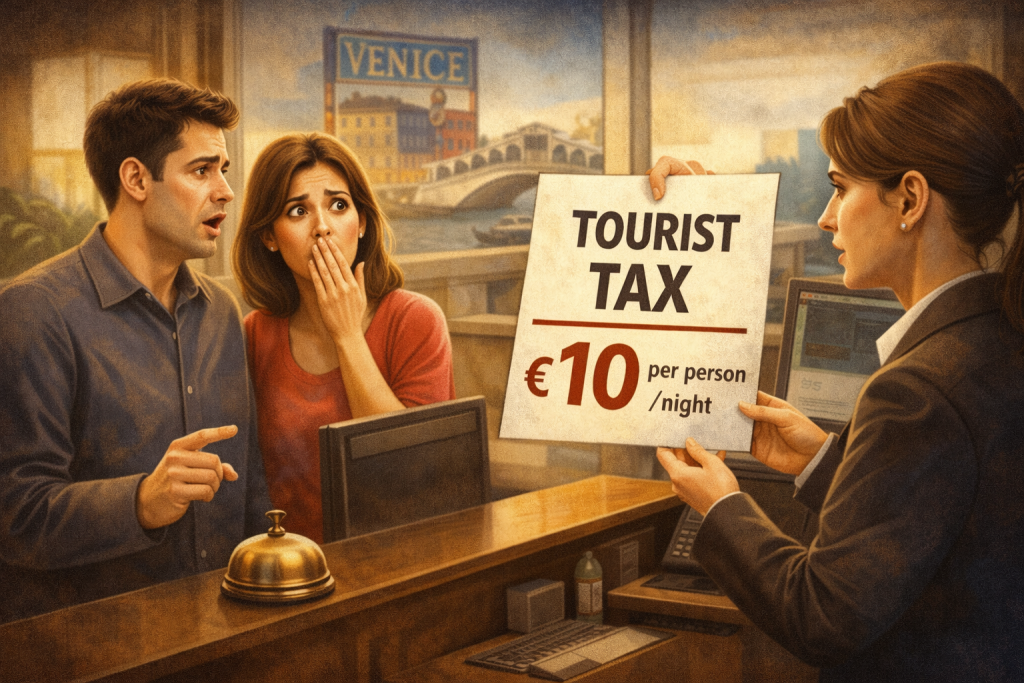
You arrive in Venice, Paris or Amsterdam. The front desk asks for an extra €5–€10 per person, per night.
This is not a scam. It is a “tourist tax.” And it is one of the fastest-growing hidden costs of international hotel stays across Europe and Asia.
How It Works
- Charged per person, not per room
- Often capped at 5–7 nights
- Cash only in many cities
- Rarely mentioned on booking sites
Real Examples by City
| City | Tax per Person/Night | Family of 4 (5 Nights) |
| Venice, Italy | €1–€5 | €100 ($108) |
| Amsterdam, Netherlands | €3 (plus 7% city fee) | €60+ ($65) |
| Paris, France | €2–€5 | €100 ($108) |
| Tokyo, Japan | ¥100–¥200 ($0.70–$1.40) | ¥4,000 ($28) |
Why It Doubles Your Bill
In a budget room ($80/night), a family of four paying €5 each per night adds €20. That’s a 25% increase before you even unpack.
How to Prepare
Search “[city name] tourist tax rate” before booking. Factor it into your budget as a separate line item.
The Minibar Sensor That Charges Without Touching
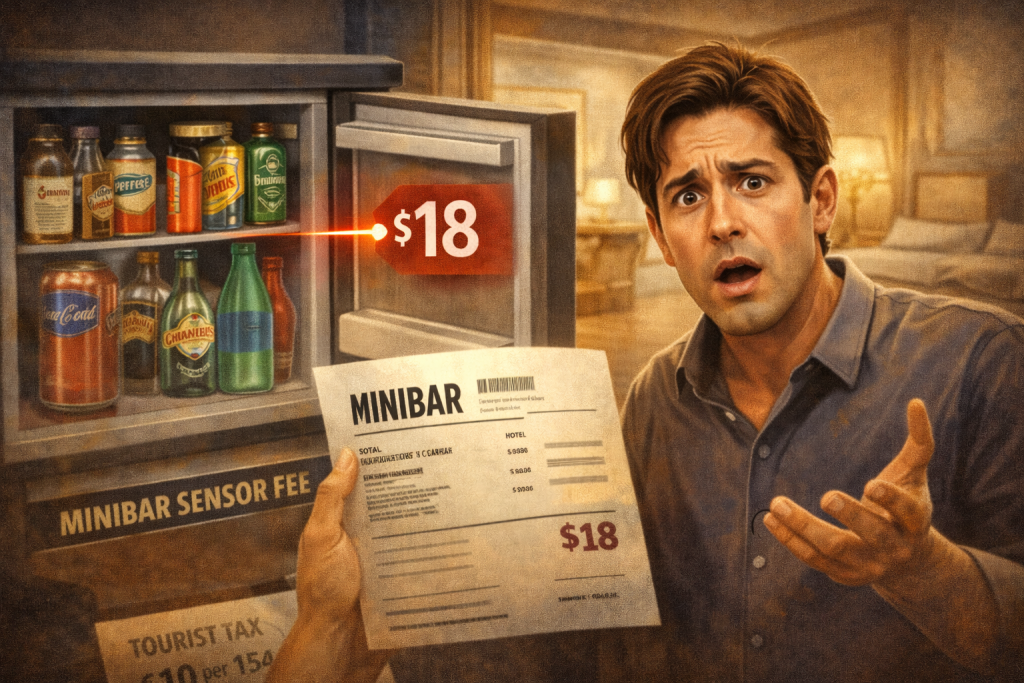
You open the minibar to store your own water, and then you close it.
Three days later, $18 appears on your bill for a soda you never drank.
Modern minibars have weight sensors. Lift an item for more than 30 seconds, even to look at it, and the system assumes you consumed it.
How to Avoid It
- Ask the front desk to remove all minibar items at check-in
- Take a timestamped photo before touching anything
- Request a key to lock the minibar
The Currency Conversion Markup (5–8% Theft)
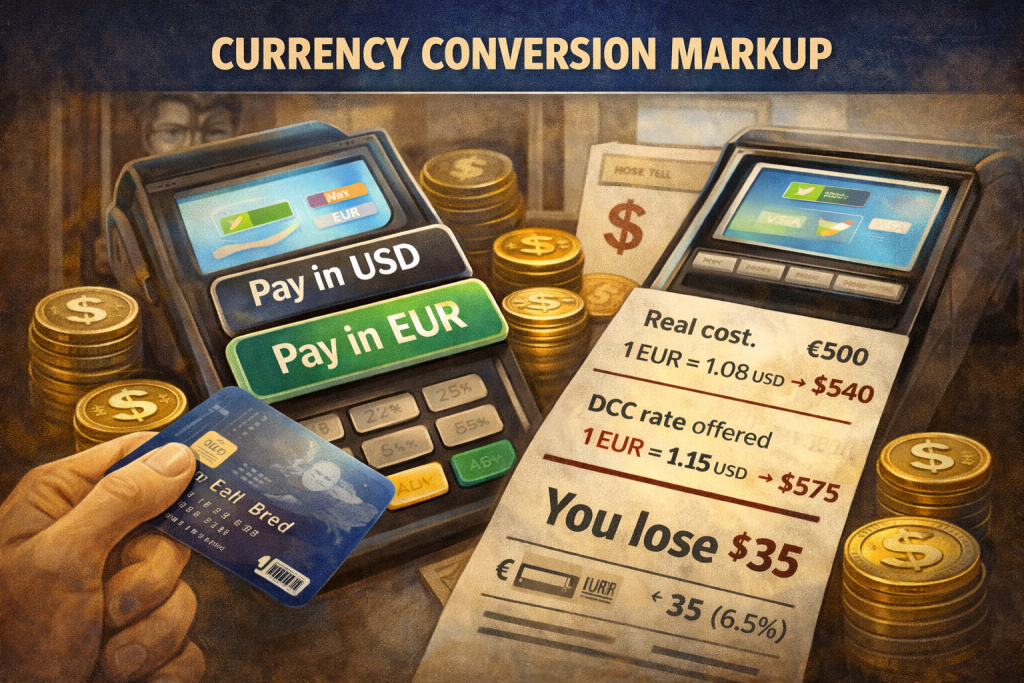
You are in Europe, and your credit card asks: “Pay in USD or EUR?”
You choose USD because you think you understand dollars. However, you just paid 5–8% extra for nothing.
This is Dynamic Currency Conversion (DCC). It is the most invisible of all hidden costs of international hotel stays because no line item says “conversion fee.”
Real Math
| Item | Amount |
| Real hotel cost | €500 |
| Real exchange rate | 1 EUR = 1.08 USD → $540 |
| DCC rate offered | 1 EUR = 1.15 USD → $575 |
| You lose | $35 (6.5%) |
How to Never Pay This
Always choose “Pay in local currency” (EUR, GBP, JPY). Let your bank do the conversion.
The Mandatory Incidental Deposit Hold
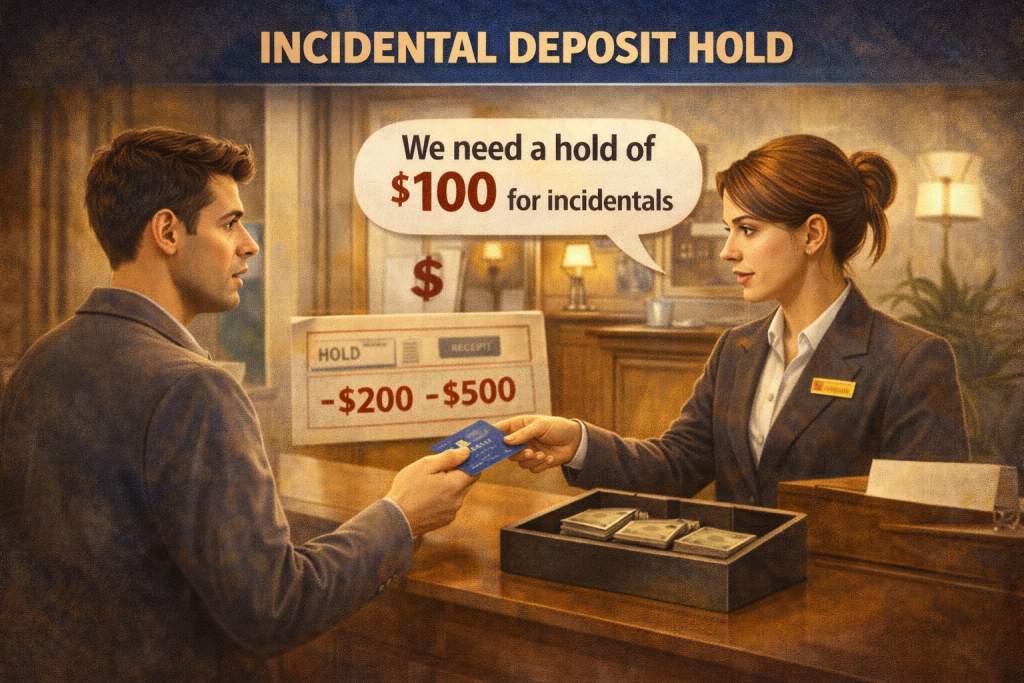
You check in, and then the receptionist at the front desk says, “We need a hold of $100 for incidentals.”
You check out. The hold stays on your card for 7–10 business days.
This is not technically a “cost” you get back. But among all the hidden costs of international hotel stays, this one hurts because it freezes your real money during your trip.
Typical Holds
| Hotel Type | Deposit Range |
| Budget hotels | $50–$100 |
| Mid-range | $100–$200 |
| Luxury | $200–$500 per night |
The Trap
If you use a debit card, that holds removes real cash from your checking account. You cannot spend it for up to 10 days.
How to Protect Yourself
Always use a credit card for hotel incidentals.
Early Check-In / Late Check-Out Penalty
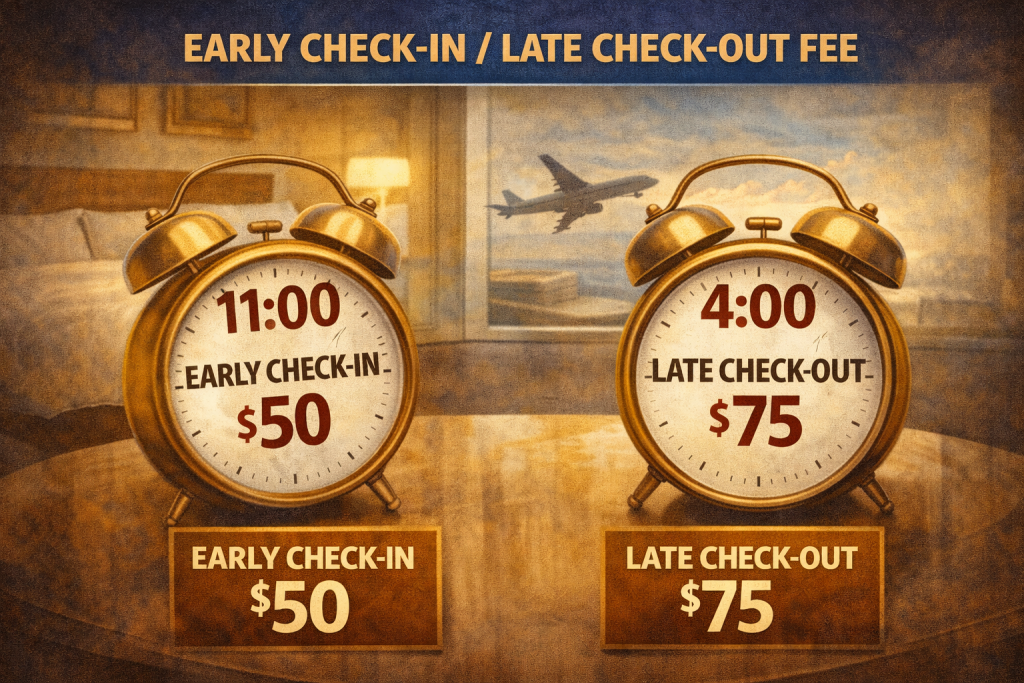
You arrive at 11 AM, check-in is 3 PM. Let’s say “Early check-in is $50.”
Your flight is at 6 PM, and check-out is 11 AM. “Late check-out is $75.”
These fees are new. Ten years ago, hotels did this for free. Today, it is one of the fastest-growing hidden costs of international hotel stays.
Typical Penalties
| Scenario | Cost Range |
| Early check-in before 1 PM | $30–$75 |
| Late check-out after 1 PM | $40–$100 |
| Late check-out after 4 PM | Full additional night |
How to Avoid
- Join free hotel loyalty programs (waives fees for Silver/Gold status)
- Use luggage storage apps (Bounce, LuggageHero) for $6/day
- Book a “day use room” on Dayuse.com ($40–$80 for 6 hours)
The Destination Marketing Fee
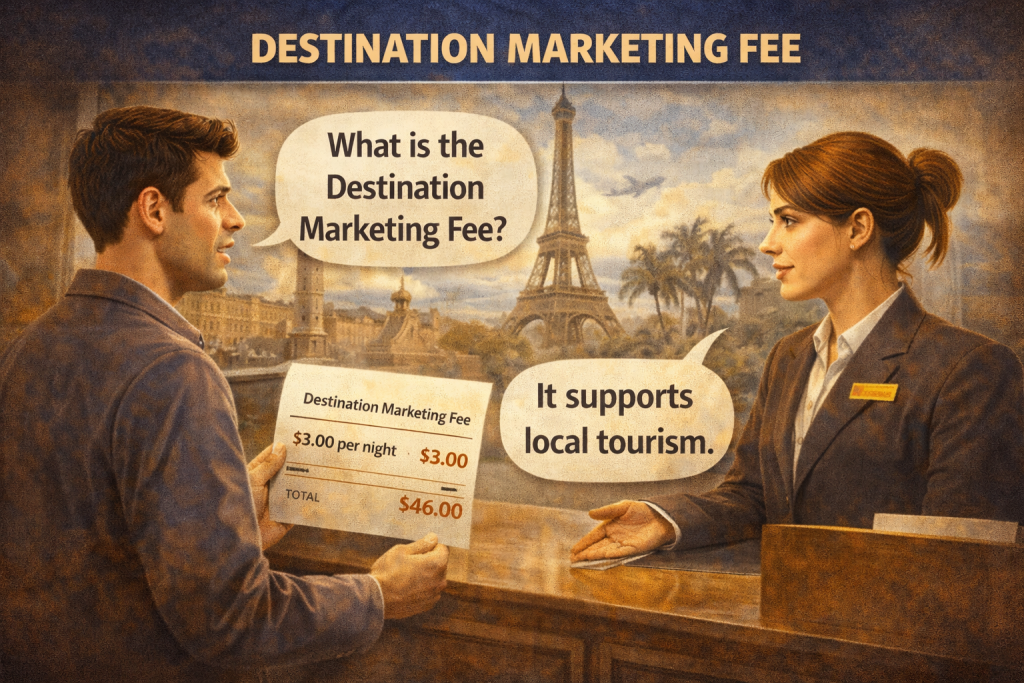
You check out. A new line item: $3 per night Destination Marketing Fee.
You ask what it is. “It supports local tourism.”
You never agreed to it. It was not disclosed at booking.
This is the newest of all hidden costs of international hotel stays. It started in the US and is spreading to Europe and Southeast Asia.
Real Examples
| Location | Fee Description |
| Austin, Texas | $5 per night for two bottled waters (value $1) |
| Bali | 2% “Sustainability Fee” on top of 10% service + 11% tax |
| Paris | €3.50 “Urban Development Fee” added in 2024 |
How to Fight It
Ask “Can I opt out?” In some US states, the answer must be “yes” by law. Check your booking confirmation, and if not listed there, refuse to pay.
Also Read: 4 Secluded Beaches in São Tomé and Príncipe with Zero Hotels.
Final Checklist
Now that you know the 7 hidden costs of international hotel stays. Calculate these as your 30-second checklist before every booking:
- Search “[hotel name] hidden fees” on Google
- Search “[city name] tourist tax”
- Scroll past “Book Now” to find “Taxes and fees payable at hotel”
- Call the hotel to be aware of: “What mandatory fees are not in the online price?”
- Use a credit card with no foreign transaction fees
- Review your checkout bill line by line
The $120 room that becomes $260 is not a glitch. It is a business model. The only way to beat it is to see the hidden costs of international hotel stays before you book and not after you check out. By following all that has been explained in the article, you get to avoid those, and your actual fees stay the same.
Frequently Asked Questions
Q1: Are the hidden costs of international hotel stays legal?
Yes, in most countries. Hotels are required to disclose mandatory fees somewhere on their website, but they often bury them in small print or on a separate “Hotel Policies” page. The only illegal practice is adding a fee that was not disclosed anywhere, not even in the fine print. In the EU and the US, that can be challenged as false advertising.
Q2: Which countries have the worst hidden costs of international hotel stays?
The United States (especially Las Vegas, Miami, and Hawaii) has the highest resort fees, often $35–$50 per night. The Caribbean and Mexico follow closely. European cities have lower fees but more types of fees, including tourist taxes, city fees, urban development charges, and VAT surprises. Asia (except Japan and Singapore) generally has the fewest hidden costs.
Q3: Can I refuse to pay the hidden costs of international hotel stays at checkout?
Sometimes, if the fee was not disclosed anywhere before you booked, not on the booking site, not in the confirmation email, not on the hotel’s own website, then you have grounds to refuse. Ask to speak to a manager and say: “This fee was not disclosed. I will not pay for it.” For resort fees in the US, some hotels will waive them if you can prove you didn’t use any of the “amenities” (pool, gym, WiFi).
Q4: Do Airbnb and vacation rentals have similar hidden costs?
Yes, but different ones. Airbnb’s hidden costs are cleaning fees ($50–$150 per stay, regardless of stay length) and service fees (10–15% of the total). These are disclosed before booking but are easy to miss. Unlike hotels, Airbnb rarely has resort fees or tourist taxes collected at the property. Those are usually included upfront or collected digitally.