You’ve probably seen people talk about earning passive income from crypto and wondered if it’s real or just hype. The question What Is Crypto Staking and How Does It Work keeps popping up for a reason. It sounds simple. Lock your crypto, earn rewards.
But once you look closer, there’s more going on beneath the surface.
Let’s break it down in a way that actually makes sense.
What Is Crypto Staking and How Does It Work
Staking is how certain blockchains stay secure and run without needing massive energy like mining. Instead of machines solving complex puzzles, people like you lock up coins to support the network.
Your crypto becomes part of the system that validates transactions. In return, the network rewards you with more crypto.
Think of it like putting money in a fixed savings account. You don’t spend it for a while, and the bank pays you interest. Except here, there’s no bank. Just code and incentives.
Related Post: Top 7 AI Crypto Coins to Watch for Strong Upside Potential
Proof of Stake Explained in Crypto Staking and How Does It Work
Here’s where things get interesting.
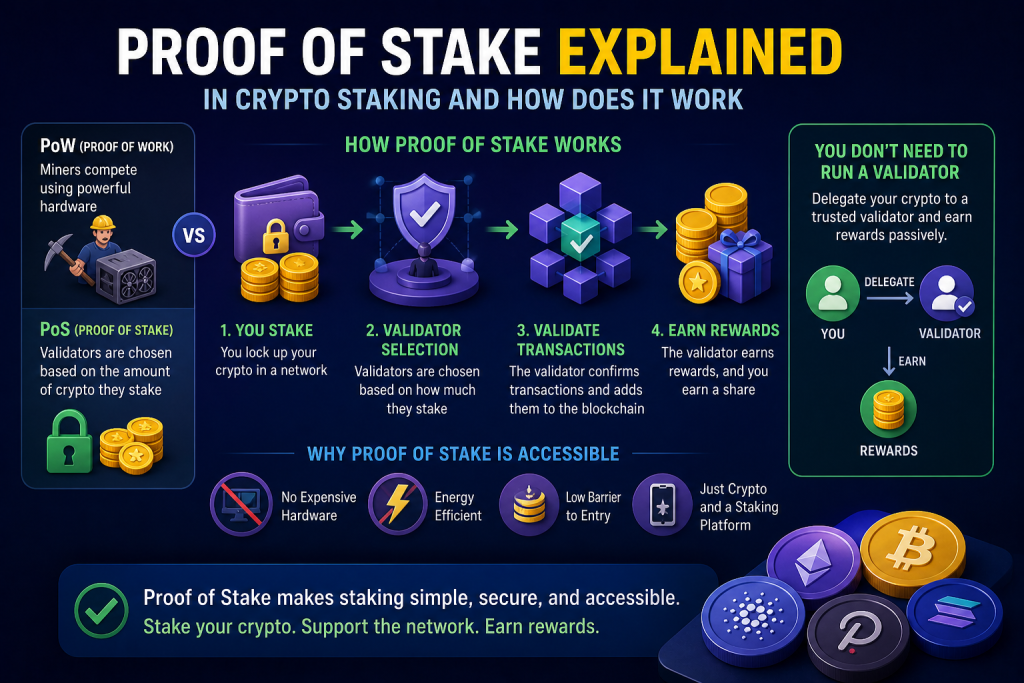
Most staking systems run on something called Proof of Stake (PoS). Instead of miners competing with hardware, validators are chosen based on how much crypto they lock up.
The more you stake, the higher your chances of being selected to validate transactions and earn rewards.
So what does this mean for you?
You don’t always need to run a validator yourself. You can delegate your crypto to someone who does the technical work and still earn a share of the rewards.
That’s why staking feels accessible. You don’t need expensive equipment. All you need is just crypto coins and a platform that supports staking.
1. How to Stake Crypto
When talking about What Is Crypto Staking and How Does It Work, you realise that getting started is easier than most people expect.
You buy a staking coin, then you choose where to stake it. This could be an exchange, a crypto wallet, or a staking platform.
Click stake, confirm, and done!
However, where you take matters. If you use an exchange, it’s simple, but you don’t fully control your funds. If you use a wallet, you have more control but need to understand how it works.
2. Staking Rewards Passive Income
You earn rewards just for holding and staking your crypto. It feels like money working for you without daily effort.
Some coins offer percentage yearly returns. About 10% – 100%, and could be higher in some cases. It all depends on the network and demand.
But don’t get carried away.
Higher rewards often come with higher risk. If a project offers unrealistic returns, you should pause and rethink.
This should tell you that not all passive income is equal.
3. Lock-Up Period Risks
Some staking requires you to lock your crypto for a fixed period. During that time, you can’t sell or move it.
Now imagine this. The market crashes, and your funds are locked.
You watch the price drop, and there’s nothing you can do.
That’s the trade-off. You earn rewards, but you lose flexibility.
Always check if the staking option has a lock-up period or allows flexible withdrawal.
4. Best Coins for Staking when it comes to Crypto Staking and How Does It Work
Not all coins are built for staking. Some of the popular ones include Ethereum, Cardano, Solana, and Polkadot. These networks use Proof of Stake or similar systems.
But popularity doesn’t automatically mean safety.
Before choosing a coin, ask yourself a few questions, such as:
Does this project have real use?
Is the network active?
Do people trust it?
You don’t want to stake something that disappears overnight.
5. Risks You Should Not Ignore in Crypto Staking and How Does It Work
To be honest, staking sounds calm and predictable, but it’s still crypto.
Prices go up and down a lot.
Even if you earn rewards, the value of your coin can drop faster than your earnings grow.
There’s also something called slashing. If a validator behaves badly or makes errors, a portion of staked funds can be lost.
It doesn’t happen often, but it exists.
So yes, staking is passive, but it’s not risk-free.
6. Choosing the Right Platform in Crypto Staking and How Does It Work
Where you stake matters more than people think. Some platforms are beginner-friendly, while others assume you already know what you’re doing.
Exchanges like Binance or Coinbase make staking easy. Wallets like Trust Wallet or MetaMask give more control.
If a platform holds your funds, you rely on them. If you control your wallet, you carry the responsibility.
Choose the one you are more comfortable with.
7. Rewards vs Inflation in Crypto Staking and How Does It Work
This is something most beginners miss.
Yes, you earn rewards, but new coins are often created to pay those rewards.
So what happens? If too many new coins enter circulation, the value of each coin may drop.
You might earn more coins, but they could be worth less.
That’s why you should always look beyond percentage returns and seek mentorship, if possible.
8. Long-Term Thinking in Crypto Staking
Staking works best when you think long-term.
If you’re constantly checking prices and trying to time the market, staking might frustrate you.
But if you believe in a project and are willing to hold it for months or years, staking becomes powerful.
You earn while you wait. It’s not about quick wins but about steady growth.
Related post: 5 best crypto wallets for students that actually make saving easy
Conclusion on Crypto Staking and How Does It Work
So, Crypto Staking and How Does It Work really comes down to this. You lock your crypto to support a network and earn rewards in return. It sounds simple, and in many ways, it is, but the details matter. Rewards, risks, lock-up periods, and coin choice all shape your experience.
If you approach it with patience and awareness, staking can become a steady way to grow your holdings. If you rush in without understanding, it can cost you.
The difference is how well you understand what you’re doing.
Frequently Asked Questions
Is crypto staking safe?
It depends on the coin and platform. Established networks are generally safer, but price volatility still exists.
Can you lose money while staking?
Yes. If the coin price drops or penalties like slashing are imposed, you can lose value.
How much can you earn from staking?
Returns vary. Some coins offer 5 percent monthly or yearly, others more. Always balance reward with risk.
Do you need a lot of money to start staking?
No, many platforms allow small amounts, making it beginner-friendly.
Can you unstake anytime?
Not always. Some staking options lock your funds for a period. Always research and be sure before staking.